Store-Bought: How to Can Without a Garden
Every week at the Buffalo Gap Farmers Market, we hear some version of the same thing.
Someone picks up a jar, asks what’s in it, and the conversation naturally turns to canning. And almost every time, someone says some version of: “I’d love to learn to can, but I don’t have a garden.”
We get it. Not everyone has the space, the time, or the desire to grow their own produce — and for a long time, that felt like a real barrier to learning to preserve food. So we’re doing something about it.
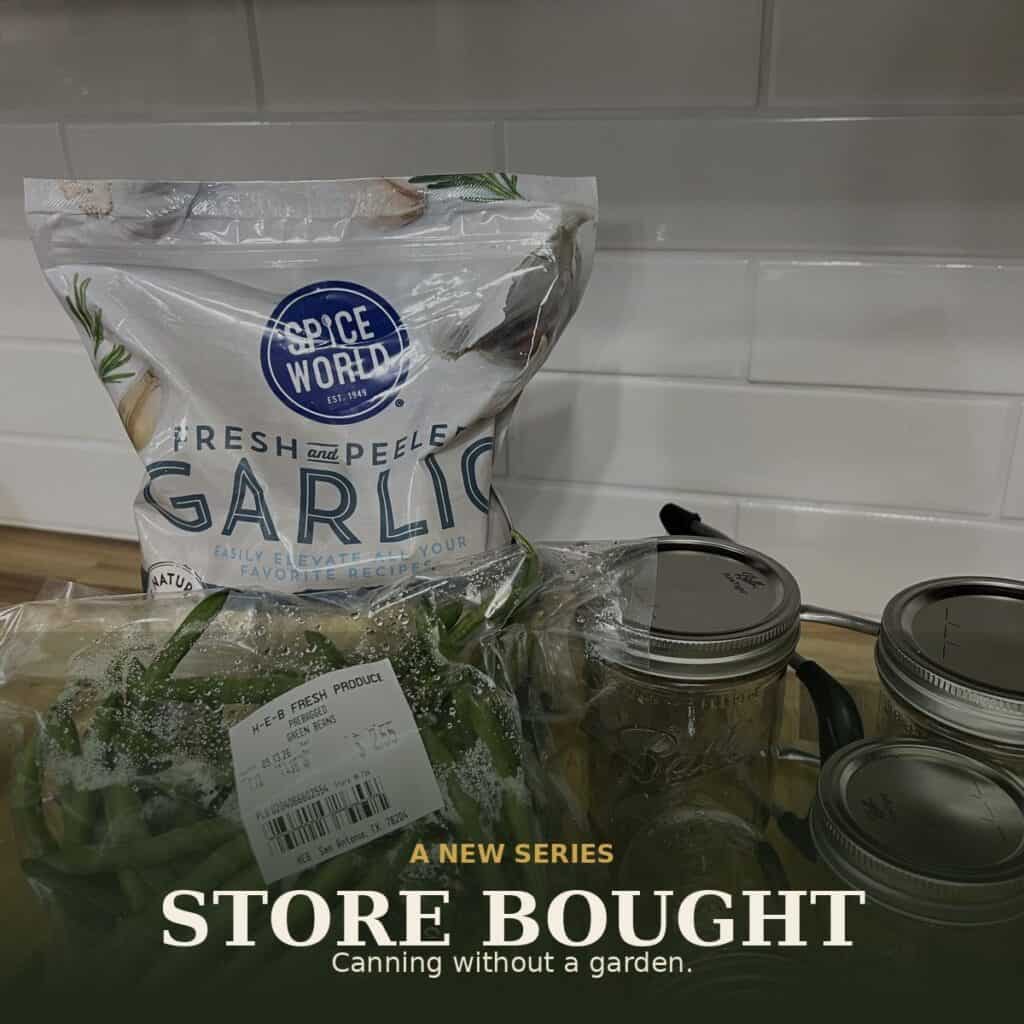
Introducing Store Bought
Store Bought is our video series built entirely around one idea: you don’t need a garden to can your own food.
Every episode starts the same way — with produce we bought, in bulk, from a regular grocery store, wholesale club, or farmers market. No garden, no homestead, no acreage required. Just what you can pick up on a normal shopping trip, turned into something that will last on your shelf for months.
We’re not embarrassed that the produce came from a store. That’s the whole point. There’s no reason to pretend otherwise, and there’s nothing wrong with starting from what’s available to you. The only thing that matters is being honest about where your ingredients came from; a theme you’ll notice runs through a lot of what we do here at Days Well Spent.
Why Canning Store-Bought Produce Still Makes Sense
Canning isn’t just for people with overflowing gardens. Buying in bulk when produce is in season and on sale, then preserving it yourself, is one of the most practical ways to stock a pantry — garden or no garden.
A few reasons this approach works:
- It’s often cheaper. Buying a large quantity of in-season produce and canning it yourself typically costs less per jar than buying the equivalent canned goods at the store.
- You control every ingredient. No mystery preservatives, no more sugar or sodium than you actually want, no guessing what a “reduced” or “no sugar added” label really means.
- It doesn’t require any special access. A grocery store, a big-box store, or a produce stand all work. You don’t need a growing season, a yard, or even much space.
- It’s a real skill, not a compromise. Learning to can with store-bought produce teaches you the exact same techniques you’d use with homegrown food. There’s no “beginner version” here — it’s the real thing.
What to Look for When Buying in Bulk
Whether you’re shopping for green beans, tomatoes, peppers, or fruit, a few general guidelines will help:
- Buy in season when possible. Produce is cheapest and freshest at the peak of its season, even at a regular grocery store.
- Check for firmness and color. Look for produce that’s free of soft spots, bruising, or shriveling — the same standards you’d apply if you were picking it yourself.
- Buy slightly underripe rather than overripe for most canning projects. Produce continues to soften during processing, so starting firm gives you a better final texture.
- Don’t be afraid of “ugly” produce. Odd shapes and minor blemishes don’t affect canning quality and are often discounted.
A Quick Safety Note
Store-bought or homegrown, the canning process itself doesn’t change — and neither do the safety basics. Always use a tested recipe with the correct ratios of vinegar, sugar, or salt rather than adjusting amounts to taste, and always process for the full recommended time for your altitude and jar size.
If you’re new to canning altogether, our guides on the must-have supplies for home canning and canning and fermenting at home are good places to start before jumping into an episode. If you live somewhere with elevation to account for, our altitude guide is worth a look too, since it changes your processing times.
Store-Bought: The Episodes
We’ll add to this list as new episodes go live, so bookmark this page for an easy way to find them all in one place.
Episode 1: Dilly Beans (Pickled Green Beans). Our first episode starts with the easiest gateway pickle there is. A bag of grocery store green beans, a simple vinegar brine, and about twenty minutes of hands-on time turn into a full jar of dilly beans. [Recipe post coming soon — check back for the link.]
More episodes are on the way — subscribe to our YouTube channel or follow along on Instagram so you don’t miss the next one.
This Isn’t a New Idea
At the end of the day, Store Bought isn’t about reinventing canning. It’s about removing a barrier that’s kept a lot of people from trying it in the first place. If you’ve ever wanted to fill your pantry with something you made yourself but assumed you needed a garden to do it, this series is for you.
Come see us at the market, ask us anything, and if you want to start canning yourself — we hope Store Bought gives you exactly the push you need.