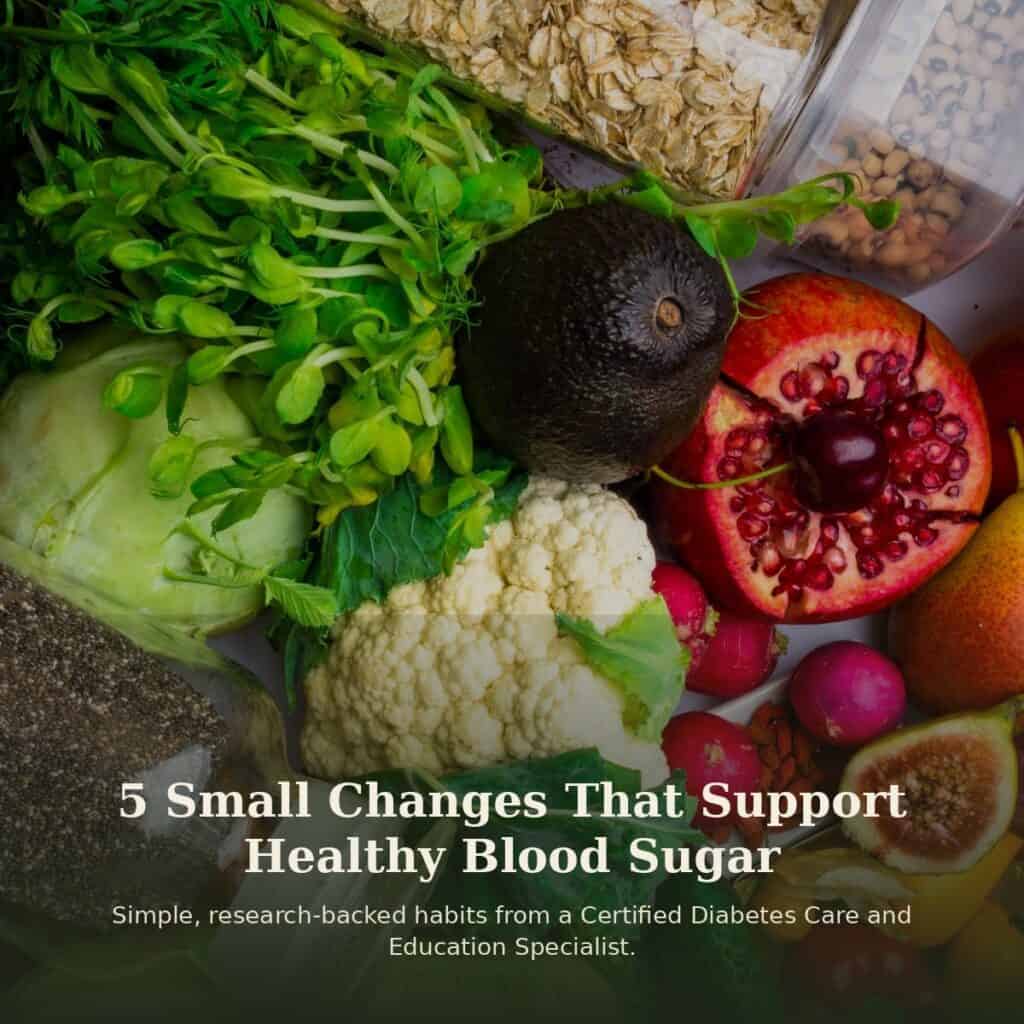
5 Small Changes That Support Healthy Blood Sugar
As a Certified Diabetes Care and Education Specialist (CDCES), I spend most of my working days helping people make sense of blood sugar — what moves it, what steadies it, and what’s actually worth their energy to change. And here on Days Well Spent, I spend my breaks and lunch in the garden and my afternoons after I get off in the kitchen. It turns out those two worlds overlap more than you’d think.
You don’t need a complete diet overhaul to support healthier blood sugar. Some of the most effective changes are small, sustainable, and easy to build into a life you already have — whether that life includes a backyard garden or not. Here are five research-backed changes, along with how they fit naturally into the way we already eat and cook around here.
You might be reading this because you or someone you love has diabetes or prediabetes — but honestly, these five changes are just good practice for anyone. Blood sugar swings affect energy, mood, and long-term health for every single person, whether or not you’ve ever had a diagnosis.
Change #1: Add Beans to Carb-Rich Meals
Beans don’t get much credit, but they pull real weight when it comes to blood sugar.
Adding beans — black beans, chickpeas, lentils — to a carb-heavy meal like rice, pasta, or potatoes can slow digestion and blunt the blood sugar spike that follows eating. That’s because beans bring fiber and plant-based protein to the table, both of which help your body break down food more gradually and keep glucose levels steadier. It’s part of why the American Diabetes Association lists beans among its “diabetes superstar foods.”
This isn’t about cutting carbs out of your life. It’s about pairing them with something that helps your body handle them better.
If you’ve ever grown your own dried beans, you already know how satisfying it is to cook with something you raised yourself — and it’s a great excuse to start, if you haven’t. A simple pot of pinto or black beans is one of the most affordable, low-effort staples you can keep on hand, especially if you cook a big batch in a pressure cooker and freeze what you don’t use right away.
Canned beans are convenient, but store-bought versions are often loaded with added sodium and unnecessary preservatives. Canning your own beans at home gives you the same shelf-stable convenience without any of that — you decide exactly what goes into the jar, right down to the salt.
Try this:
- Add black beans to a rice bowl with vegetables and avocado, or try our black bean and quinoa burrito bowl
- Stir chickpeas or lentils into soups, pasta dishes, or grain salads
- Simmer a pot of black bean chili or lentil curry for an easy, fiber-rich dinner
Change #2: Save Carbs for Last
The order you eat your food in can be just as important as what’s on the plate.
Starting a meal with vegetables and protein — and saving the starchy carbs for last — slows digestion and tends to produce a smaller blood sugar rise than eating the carbs first. Some research even suggests this “carb-last” approach can help reduce blood sugar swings throughout the day.
Nothing gets removed from the plate here. You’re just changing the order you eat, which makes this one of the easiest habits to stick with, whether you’re at home or out at a restaurant.
Try this:
- Start with a salad or vegetable side before the main dish
- Eat a few bites of protein before moving to the carbs
- With mixed meals like stir-fries or grain bowls, eat around the starches first
Change #3: Choose Whole Grains Over Refined Ones
Whole grains earn their place on the ADA’s superstar food list for good reason.
A whole grain still has all three of its original parts: the bran, which carries fiber; the germ, packed with vitamins and healthy fats; and the endosperm, which holds the carbohydrate. Refined grains — white rice, white bread — have the bran and germ stripped away, taking most of the nutrition with them. What’s left digests faster and tends to spike blood sugar more sharply.
This is a place where growing and preserving your own food really pays off. When you’re cooking from scratch instead of relying on heavily processed packaged foods, you already have more control over whether you’re reaching for whole grains or refined ones — the same way you have full control over sugar and salt when you can make your own instead of buying something off a shelf. It’s a theme that shows up again and again in how we eat: the more of the process you’re part of, the more say you have in what actually ends up on your plate.
Look for “whole” at the start of an ingredient list — whole wheat flour, 100% whole grain oats — as your quickest way to tell the real thing from a look-alike.
Try this:
- Choose products that list “whole” as the first ingredient
- Add oats, barley, or brown rice to dishes you already make
- Swap in whole grain pasta, crackers, or wraps where you’d normally reach for refined versions
Change #4: Move After You Eat
A little movement after a meal does more than pass the time — it puts your blood sugar to work.
Blood sugar naturally rises after eating, but light activity gives your muscles a chance to use some of that glucose for energy, which can soften the spike and leave you with steadier energy afterward. Everyone benefits, though it seems to matter most for people managing diabetes or insulin resistance. Even 10 to 15 minutes of gentle movement makes a measurable difference.
This is an easy one to build into a life that already involves a garden. Scott and I take our dog Twinkie out almost every evening and walk the garden or wander different areas of the property — it’s not something we think of as “exercise”; it’s just part of the evening. A walk through the rows, pulling a few weeds along the way, or hauling the watering can around counts every bit as much as a formal walk around the block.
Try this:
- Take a short walk after dinner, even just around the yard
- Do a lap of the garden beds to check on what needs attention
- Handle a few chores — dishes, laundry, tidying up — right after eating instead of sitting down immediately
Change #5: Get Better Sleep
Sleep might be the most overlooked tool in the whole list, but it does real work behind the scenes.
Poor sleep makes it harder for your body to regulate blood sugar, and it often shows up the next day as stronger cravings, more fatigue, and less motivation to stick with the habits that actually help. The reassuring part is that small, consistent changes to your bedtime routine—a more regular sleep window, less screen time before bed—have been shown to improve both sleep quality and blood sugar in people with prediabetes and type 2 diabetes.
You don’t have to get this perfect. Aim for consistency over precision.
Try this:
- Go to bed and wake up around the same time each day
- Set a wind-down reminder 30–60 minutes before bed to step away from screens
- Build in something calming before sleep — reading, stretching, or just slowing down
Small Changes, Real Results
None of these five changes require a total overhaul of how you eat or live. Pairing carbs with beans, changing the order you eat in, leaning on whole grains, moving after meals, and protecting your sleep — each one supports your blood sugar in its own way, and together they add up to something meaningful.
One more thing worth saying clearly: you don’t need a diabetes diagnosis for any of this to matter. Blood sugar swings — the energy crashes, the afternoon crankiness, the 3 pm craving for something sweet — happen to almost everyone. These five changes are just good, evidence-based habits for steady energy and long-term health, full stop.
If you’re not sure where to start, pick one. Add beans to lunch tomorrow. Take a walk after dinner tonight. Small, doable changes build the kind of confidence that makes the next change easier — and that’s really what lasting progress looks like.
References
- Winham, D. M., Hutchins, A. M., & Thompson, S. V. (2017). Glycemic response to black beans and chickpeas as part of a rice meal: A randomized cross-over trial. Nutrients, 9(10), 1095. https://doi.org/10.3390/nu9101095
- American Diabetes Association. (n.d.). Diabetes superstar foods. https://diabetes.org/food-nutrition/food-and-blood-sugar/diabetes-superstar-foods
- Shukla, A. P., Iliescu, R. G., Thomas, C. E., & Aronne, L. J. (2017). Carbohydrate-last meal pattern lowers postprandial glucose and insulin excursions in type 2 diabetes. BMJ Open Diabetes Research and Care, 5(1), e000440. https://doi.org/10.1136/bmjdrc-2017-000440
- Touhamy, S. II, Levy, C. J., Hood, K. E., Bhakta, N. A., & Shukla, A. P. (2025). Carbohydrates-last food order improves time in range and reduces glycemic variability. Diabetes Care, 48(2), e15–e16. https://doi.org/10.2337/dc24-1956
- Centers for Disease Control and Prevention. (n.d.). Get active | Diabetes. https://www.cdc.gov/diabetes/living-with/physical-activity.html
- Pahra, D., Sharma, N., Singh, J., & Bhattacharya, S. (2017). Impact of post-meal and one-time daily exercise in patients with type 2 diabetes mellitus: A randomized crossover study. Diabetology & Metabolic Syndrome, 9, Article 84. https://doi.org/10.1186/s13098-017-0263-8
- Tsereteli, N., Monkhouse, S. J. W., Ali, A., & Taheri, S. (2022). Impact of insufficient sleep on dysregulated blood glucose control under standardised meal conditions. Diabetologia, 65(2), 356–365. https://doi.org/10.1007/s00125-021-05608-y
- García-Serrano, C., Pujol Salud, J., Aran-Solé, L., Montero, J., Riera, M., & Sánchez-Hernández, R. M. (2022). Enhancing night and day circadian contrast through sleep education in prediabetes and type 2 diabetes mellitus: A randomized controlled trial. Biology, 11(6), 893. https://doi.org/10.3390/biology11060893
This article is for general education and isn’t a substitute for personalized medical advice. If you have diabetes, prediabetes, or take medication that affects blood sugar, talk with your healthcare provider or diabetes care team before making changes to your eating or activity routine.